
Maltodextrin at a Glance
- Definition: Maltodextrin is a nearly flavorless carbohydrate powder made by partially breaking down starch.
- Origin: Usually produced from corn starch, but also from wheat, potato, or rice starch.
- Use: Works as a carrier for flavors, as a bulking and thickening agent, and as a fast source of energy.
- Legal status: Classified as an ingredient in the EU, not as an additive – which is why maltodextrin carries no E-number.
- Standout trait: Barely sweet, yet with a high glycemic index comparable to glucose.
- In the tea world: Instant and fruit powders often use maltodextrin as a carrier that turns liquid extracts into a fine powder.
You spot "maltodextrin" on an ingredient list and wonder: is this sugar, an additive, or just technical jargon for some white powder? Short answer: maltodextrin is an almost flavorless carbohydrate powder made by partially breaking down starch. In food production, it works as a carrier, a bulking agent, or a fast source of energy – found in instant powders, sports drinks, and convenience foods alike.
Definition
Maltodextrin is made up of chains of D-glucose units of varying length, released from starch using enzymes or acid. How far that breakdown goes is captured by the so-called DE value (dextrose equivalent): for maltodextrin, it sits between 3 and 20. Native, unprocessed starch has a DE value of 0; pure glucose sits at 100 – maltodextrin lands right in between. The result is a white to slightly yellowish powder that dissolves easily in water, barely tastes sweet, and carries almost no flavor of its own.
Description
These exact properties make maltodextrin so versatile in food production. As a carrier, it binds flavors, vitamins, or fruit extracts into a pourable powder without changing their taste. As a bulking and thickening agent, it adds texture and volume – think instant soups, sauces, or baked goods. And as a fast source of energy, it's valued in sports drinks and energy bars, since the body absorbs its short glucose chains quickly.
Legally, the EU draws a line between ingredients and additives: because maltodextrin is produced enzymatically – a natural process – rather than chemically modified, it counts as an ingredient, not an additive. Unlike thickeners that carry an E-number, it only needs to be listed as "maltodextrin" on the label.
If you're avoiding gluten, you can usually relax: even when maltodextrin comes from wheat starch, the production process breaks it down so thoroughly that no detectable gluten traces remain.
Historical Background
The term "maltodextrin" emerged in the 1950s – a combination of maltose (malt sugar) and dextrose (glucose), its two building blocks. The first commercially produced maltodextrin hit the market in 1959, made by the US company Amaizo through acid hydrolysis of corn starch. By the 1960s, enzymes (amylases) increasingly replaced acid – a method that's barely changed since, and one that was further refined through regulation into the 1980s, including the first official US guidelines in 1983.
Alongside the classic, easily digestible variety, a second family emerged starting in the 1990s: resistant maltodextrins. Structurally more complex, they're barely digested in the small intestine and behave more like soluble fiber than a fast energy source – despite sharing a name, the two maltodextrin types have little nutritionally in common.
Maltodextrin in our Yuzu Powder
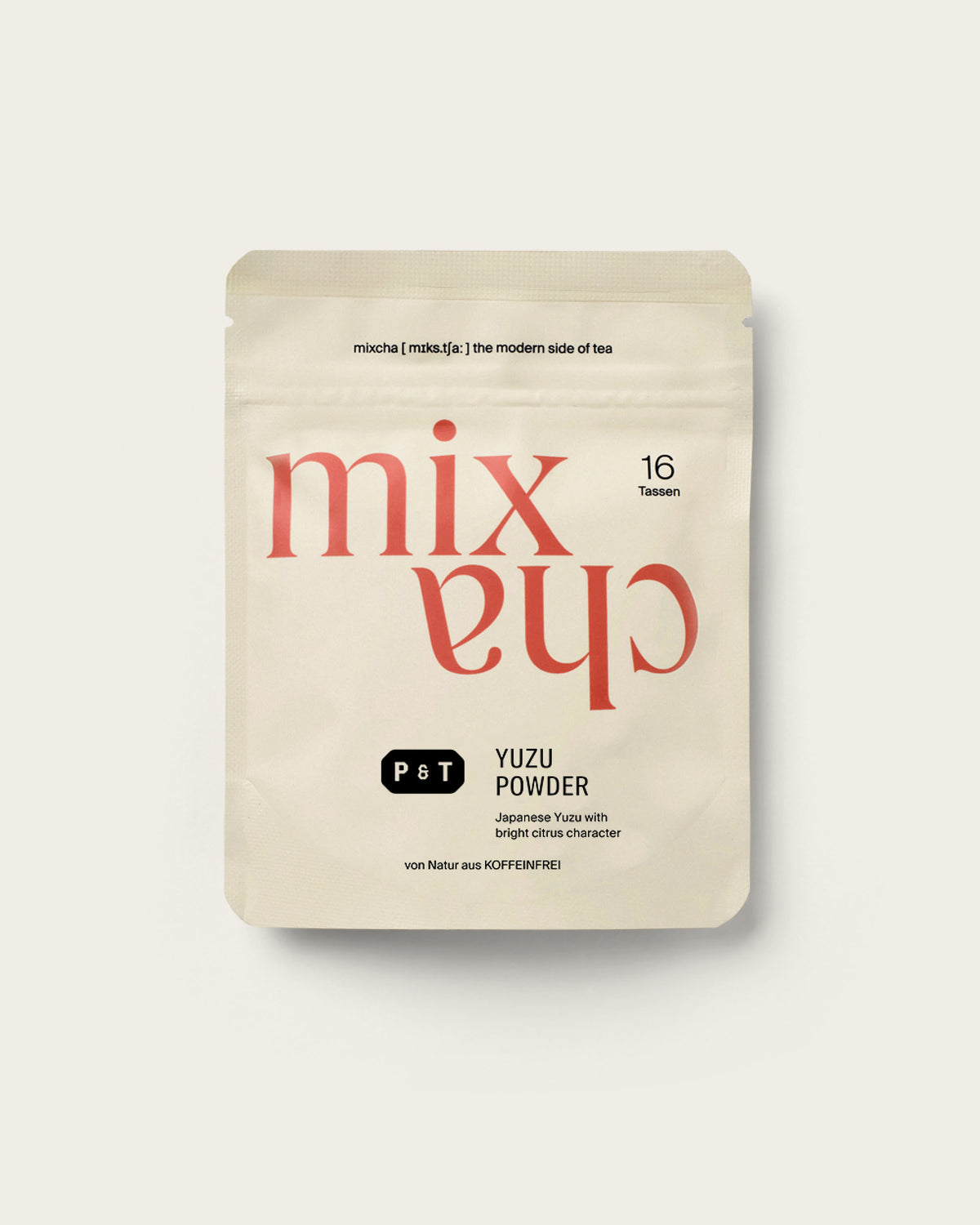
Here's what that looks like in practice: our own Yuzu Powder. To make it, we blend yuzu juice with maltodextrin. This starch-derived ingredient is what allows the liquid juice to turn into a fine powder in the first place. The mixture is then gently spray-dried, sifted, tested, and packaged.
Unlike ground tea powders, our Yuzu Powder isn't made from dried peel – it's made directly from the fruit juice. A process that simply wouldn't work without an ingredient like maltodextrin.
[[ Product Slider ]]
Interesting Facts
- Barely sweet, yet a high blood sugar impact: Maltodextrin tastes almost neutral, but depending on its DE value, its glycemic index runs from about 85 to over 130 – often higher than table sugar.
- No additive status, yet sometimes invisible on the label: When maltodextrin is used only as a processing aid – say, to help spray-dry a powder – it may not even need to appear on the ingredient list.
- Once sold as "diet sugar": In Germany, maltodextrin was long marketed under names like "diet sugar" or "baking sugar" and was popular among people with diabetes, before a modern understanding of the glycemic index revised that reputation.
- From liquid to powder: Maltodextrin makes it possible to turn juices and extracts into a pourable, shelf-stable powder in the first place – instead of grinding them from already-dried raw material, like classic tea powders.
- A favorite in endurance sports: Thanks to its fast energy release, maltodextrin is a staple ingredient in sports drinks and carbohydrate gels.